
How to File a Car Accident Claim in California, and the Mistakes That Cost People Their Case
Most of what goes wrong in a car accident claim happens before anyone thinks of it as a claim. It happens in the first hours and weeks: in a phone call that felt friendly, in a doctor's visit where someone admitted they were confused about what happened, in a few months of resting at home hoping the pain would pass. Each of those is what a reasonable person does without knowing how the pieces connect later on.
This chapter goes through the first steps in order: what to capture at the scene, what the emergency room can and can't see, who to talk to and who to hold off on, how an insurer approaches a claim, and the California deadlines that apply. The general advice about what to do after an accident is easy to find. What's here is the part I see people miss, and why each piece matters months later, when the claim is being priced.
And you think what you're telling this doctor is just you helping you get treatment. But if you don't know the moving parts, you don't know that all that's gonna be shown to the insurance company, you can unknowingly do things that will damage your claim even though you don't really mean that.
At the scene: the photo that matters most
If you're badly hurt, call an ambulance and let everything else wait. If you're able to document the scene, the first thing to get is the other driver's insurance information. We see this go wrong a lot. People forget to ask, or the other driver leaves, or flees. When that happens, a photo of the license plate is what I want more than anything else, because with a plate we can track down who it is.
So when you photograph the vehicles, get the plates in the shots. A photo of the plate makes it very hard for a driver to take off and later claim they weren't involved.
Everything else at the scene can wait, including the arguments about who was at fault and any call to an insurance company. Talk to a lawyer before you talk to any insurer.
What the emergency room can see, and what it can't
Go to an emergency room, or at least an urgent care, then follow up with your primary care doctor and don't wait. Being told to go home and rest is not being told to stop seeing doctors. An ER is built to catch emergencies like a bleed or a fracture, not every injury that surfaces later; Chapter 3 explains the rest and how treatment gaps are read.
Be careful, too, with what goes into the chart. A doctor asks how the accident happened, and a shaken-up patient answers, "I was in a car accident, but I don't really remember how it happened." The insurance company can later use that sentence to suggest you ran the red light. And if you're still in pain, say so at every visit.
Before you call any insurance company, including your own
Many people assume their own insurer is there to help them. Often it has money at stake too. If you carry uninsured or underinsured motorist coverage, UM/UIM, your own insurance company may be on the hook for some amount, which gives it some of the same incentives as the other driver's insurer not to pay. You can be on what looks like the same team and not be. The only thing you need to do with your own company before you have a lawyer is report the claim and report that you were injured.
You do not want to do a recorded statement without a lawyer. You definitely do not want to talk to the other side's insurance company.
The calls will come anyway. An adjuster will be as friendly as possible, want to make sure you're okay, and ask you to stay in touch. Those calls exist to gather information, and you can let them go to voicemail. Something as ordinary as saying your back is a little sore but you're fine gets recorded, and a year later the part that matters to the other side is "I'm okay," set beside your claim that you were injured.
Treatment updates are another place claims get lost. Someone calls an insurer, mentions they're going to physical therapy, and hears that the company will pay for all of it if they just sign a piece of paper. Then they've signed their claim away. Or the insurer says it will cover all the medical bills, and when the bills arrive, it doesn't want to pay all of them. Once the scene is documented, your job is to get treatment and do everything you can to get better. The bills and the updates are the lawyer's job.
Delay, low offers and the cost of settling early
An insurer evaluating a claim looks for reasons to offer less or to deny it. Fault is the first: in a head-on collision, if they can say you were over the double yellow, the offer may be zero, however serious the injuries. Gaps in treatment are the most common reason, and they're why I keep returning to follow-up care. Delay is another. If a company expects to pay eventually but can stretch a case out for three years, the money sits in an account earning interest in the meantime, and some people get frustrated enough to settle for less. Even simple rear-end cases that should be paid promptly end up in litigation, and some reach trial. None of this requires a villain. It's the economics of the business, and because it's predictable, it can be planned for.
Settling early is the one mistake that can't be fixed later. "I just wanna get this over with" is a feeling I understand completely. But if you settle before anyone knows whether you'll need a specialist, imaging or surgery a year from now, we're shooting in the dark, and the claim is much more likely to be undervalued, by the insurance company and sometimes by the injured person too.
A claim's value follows the treatment more than the property damage, as Chapter 2 explains.
California deadlines: two years, and sometimes six months
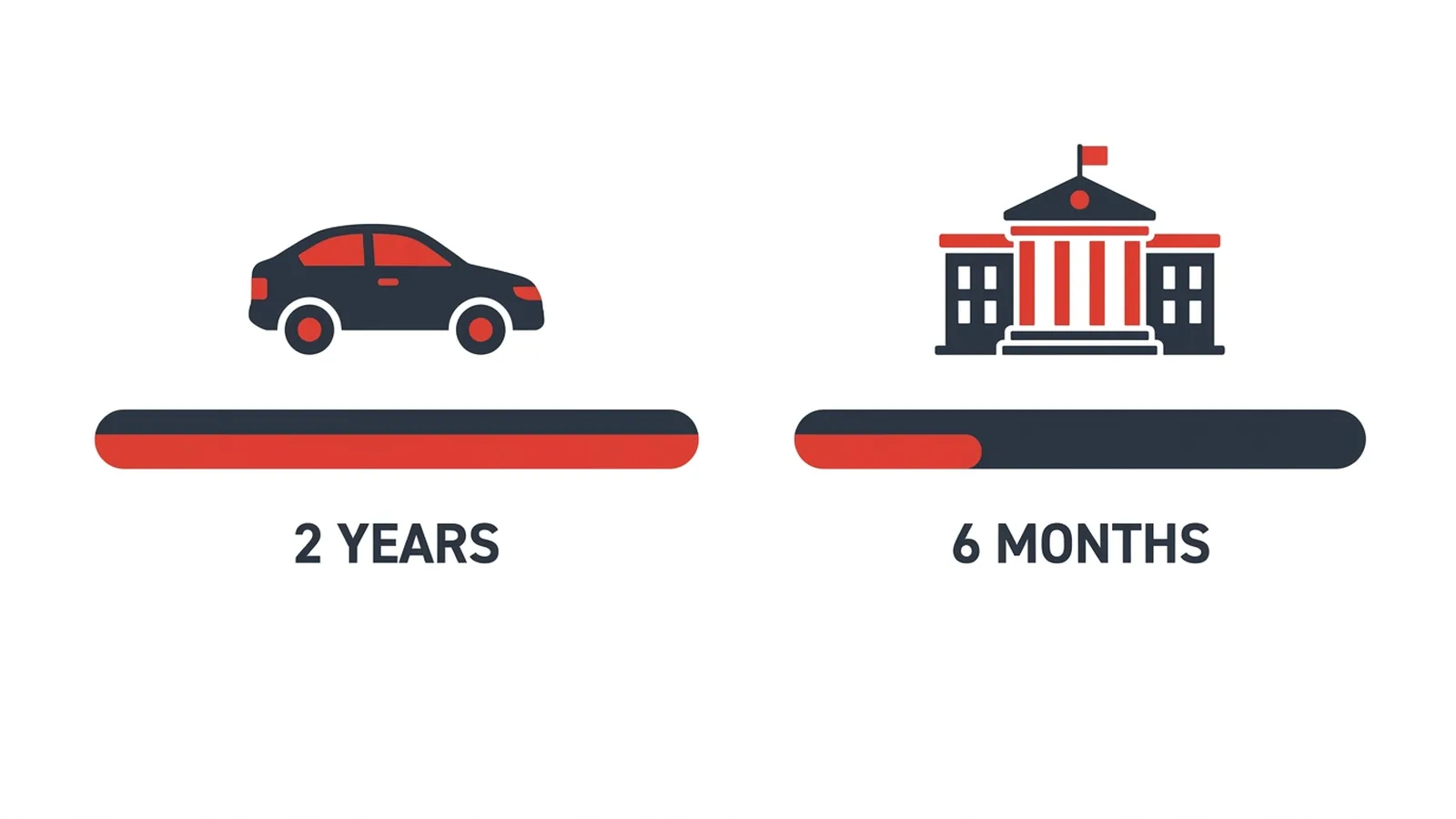
For a standard California injury claim, such as a normal auto accident, the statute of limitations is two years (California Code of Civil Procedure section 335.1). When a government vehicle is involved, the first deadline is much shorter. If a Caltrans truck or a city vehicle hits you, a claim generally has to be presented to the public entity within six months (Government Code section 911.2), and if nothing is done in that window, you can lose the claim. The same short window applies when someone is hurt on public property, such as a city sidewalk or a government building, which Chapter 9 covers.
I see what happens when people don't know this. Someone gets hurt, treated for seven, eight or nine months, decides they're injured badly enough to pursue a claim, and learns the six-month window has closed and the government claim may be lost. A person can be left with a lifelong injury and no compensation for it, only because nobody contacted a lawyer soon enough. It isn't always obvious who owns a piece of property, either, or whether a city or the state is involved, which is one more reason to get those questions answered early.
Filing the case itself is a car accident attorney's responsibility. Most of the cases my office files go to San Diego Superior Court, and wherever a case is filed, it has to be filed inside the deadline, even if that means filing quickly to preserve it.
Common Questions
- What should I do right after a car accident in California?
- Get medical care first, at an ER or at least an urgent care, and call an ambulance if you're badly hurt. If you can, get the other driver's insurance information. If the driver leaves, photograph the plate. "If you can get a photo of the license plate, that's, like, the biggest thing, 'cause we can track down who it is with a photo of the license plate." Then follow up with your own doctor.
- Should I talk to the insurance company after a car accident?
- Not before you've talked to a lawyer. Report the claim and the fact that you were injured to your own insurer, but don't give a recorded statement, and don't discuss the crash or your treatment with the other driver's insurance company. The calls are friendly, and anything you say, including "I'm okay," can be recorded and used later. Your own insurer may also owe you money under UM/UIM coverage.
- How long do I have to file a car accident claim in California?
- Two years for a standard injury claim from a normal auto accident. If a government vehicle was involved, such as a Caltrans truck or a city vehicle, a claim against the public entity generally has to be presented within six months. Because people often keep treating for months before thinking about a claim, and because it isn't always clear whether a public entity is involved, it's safer to talk to a lawyer early.
- What mistakes can hurt a car accident claim?
- The ones I see most are not getting the other driver's information, calling insurance companies too early, and treating go home and rest as a reason to stop seeing doctors. Others are telling a doctor you don't remember how the crash happened, reporting that you're nearly recovered when the pain returns as soon as treatment stops, signing paperwork in exchange for paid therapy, and settling before anyone knows whether you'll need surgery.
- Why does the insurance company keep calling to check on me?
- The calls are part of how a claim is evaluated. An adjuster will be as friendly as possible and ask you to stay in touch, but the purpose is to gather information, including statements that can later be used to lower the claim. You don't need to answer your own insurer's calls beyond reporting the claim and your injury, and you can let the other side's calls go to voicemail.
Chapter Reflection
Every mistake in this chapter starts as an ordinary, reasonable act that someone pricing the claim reads later: resting at home, being polite on the phone, telling a doctor the truth, that you're confused. The answer is to know, before the first call comes, how each of those moments will be read, without becoming suspicious of everyone who asks how you're doing. Hindsight is always 20/20, and the point of these pages is to give you some of it while it can still change the outcome.